


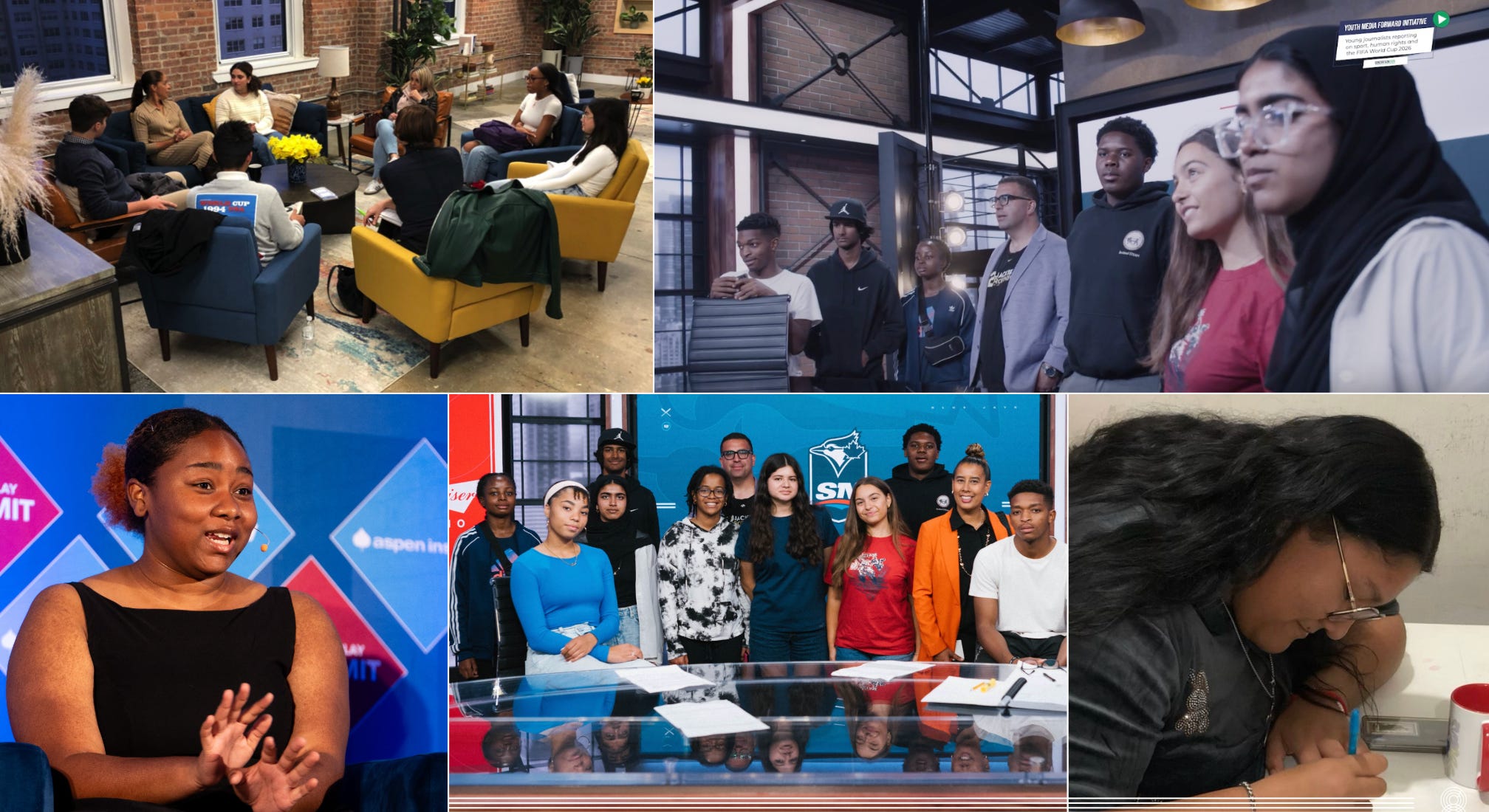
From September 2024 - August 2026, the Centre for Sport and Human Rights led an unprecedented youth media program working with over 30 teens based in four of the host cities for the 2026 World Cup: in Guadalajara, Los Angeles, New York New Jersey, and Toronto.
The initiative helped to build the young journalists’ and storytellers’ skills, confidence and connections. And it brought their perspectives on sports (in English and in Spanish) to influential audiences to drive change.
Here are six highlights from Youth Media Forward. Each can provide ideas and inspiration for future youth media programming at the intersection of sport and human rights.
1. A supportive platform for youth perspectives
“A big thank you for creating a space where youth voices are heard and valued. It’s rare, and it meant a lot.” Naira, Toronto
Within the broad frame of “sports in our lives, neighborhoods and beyond”, and with human rights as an underpinning, participants had a lot of flexibility to report and create the stories that mattered most to them. The Youth Media Forward platform has published over 60 stories!
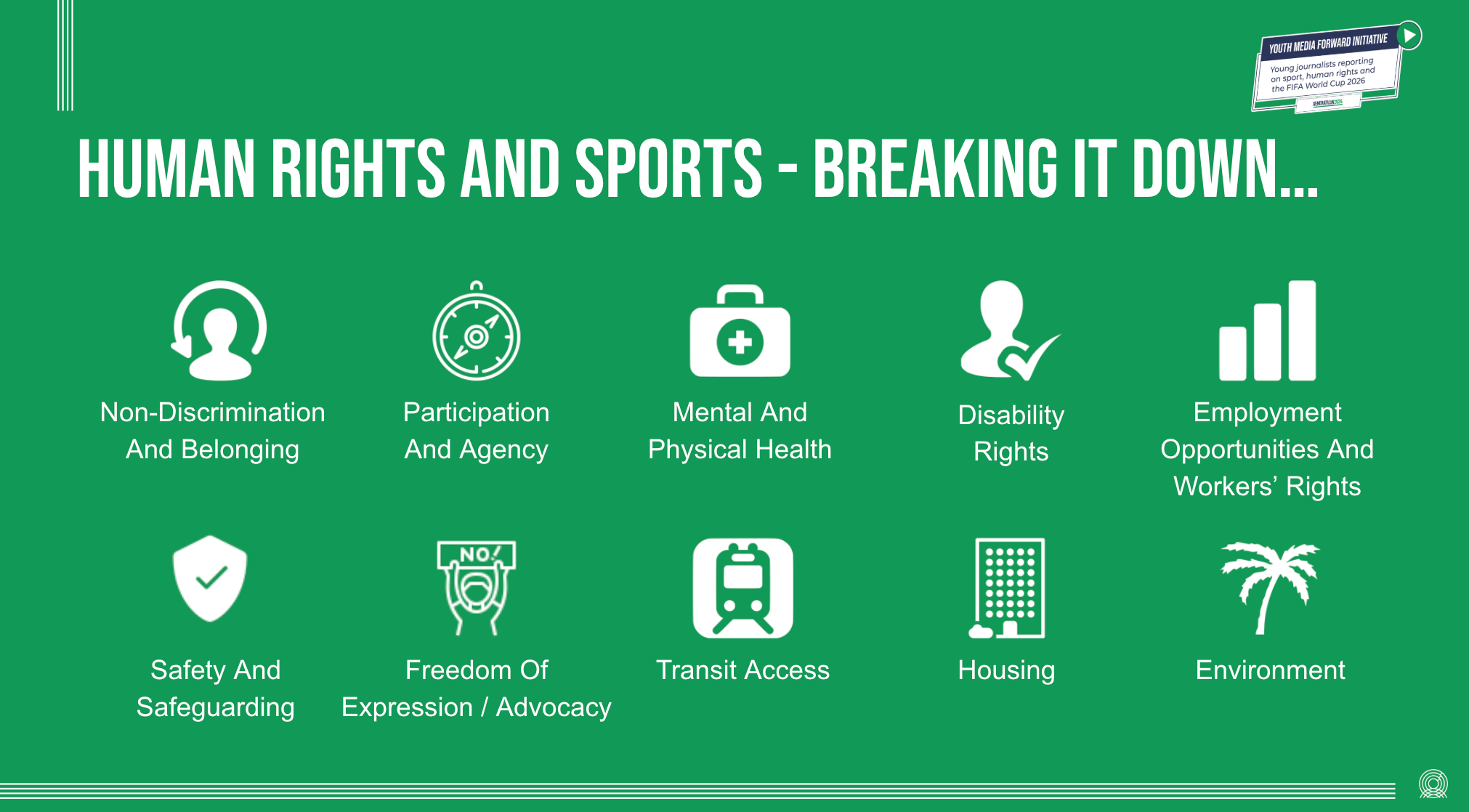
The young journalists interviewed coaches, commentators, athletes, club managers and fellow teens. They honed in on topics such as barriers to access to sports, athlete advocacy, gender, race, and mental health, and explored the impacts of the World Cup on workers and local communities.
“The best part was having the creative freedom to choose our own project styles and what we wanted them to focus on.” Sydney, New Jersey
2. Reaching influential audiences
“[What has stood out for me] is the opportunity to be in rooms that I never would have been in otherwise, and talking to people I would never have imagined being able to meet.” Camilla, New York City
Building on their reporting, Youth Media Forward journalists shared their stories and perspectives in front of influential audiences, reaching a combined in-person audience of over 1100.
These included Aspen Institute’s Project Play conference in Boston, a meeting of the Inter-American Commission of Human Rights in Miami (see pg. 60), and a gathering hosted by adidas Foundation and the World Federation of Sporting Goods Industries in New York City.
3. Learning from and interacting with professionals
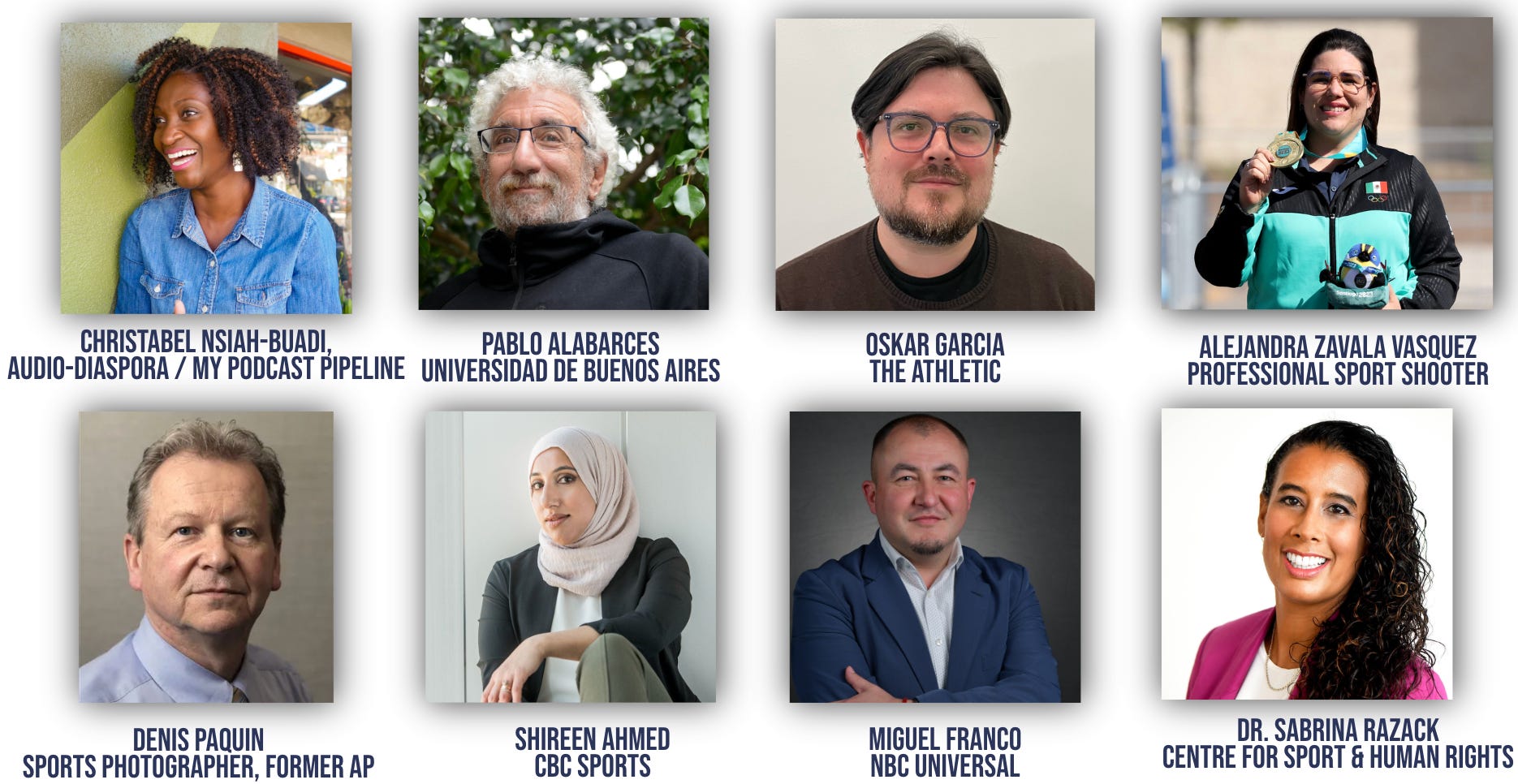
In addition to in-person opportunities we held seven full-cohort bilingual virtual sessions, featuring guest speakers from the worlds of sports and the media. The interactions between adult presenters and the youth were a two-way process, each inspiring and learning from each other.
4. Adaptation for local contexts
We partnered with local organizations in the host cities to keep Youth Media Forward grounded and contribute to an ongoing local legacy.
Grupo Mayama was Youth Media Forward’s implementation partner in Guadalajara. They adapted the learning journeys and assignments to the context of the youth that they work with, and accompanied the participants as they interviewed an investigative journalist, visited Akron stadium and the Guadalajara FIFA Fan Fest, reporting on their unique observations.
5. Building skills for the future
“One skill I really strengthened through Youth Media Forward was how to be a good interviewer. I learned the importance of really listening, not just asking questions, so I could connect with the speaker and follow up in meaningful ways.” Jeevan, Toronto
As the participants move on to their final year of high school, to college or the workplace, they are bringing strengthened skills in interviewing, storytelling and diverse media formats, as well as confidence and leadership skills.
6. Connection across boundaries
It can be hard for young people to connect meaningfully with others who share their interests, particularly with people from different neighborhoods, states and countries. Through the lens of a global tournament hosted throughout the region of North America, Youth Media Forward teens developed new perspectives and connections that they will carry forward in their lives.
“I loved getting to meet new people from the different host cities. As a high school student, I don’t get many opportunities to interact with students from different states.” Joyce, Los Angeles
Inspired by what you’ve read?
Get in touch to support the future of this program!
**************
Go deeper:
Check out the 60+ stories by Youth Media Forward teens
“Whose story?”: A podcast with four youth reporters in conversation with narrative expert Christabel Nsiah-Baudi about the stories they reported and the impact of the program
A short guide in English and Spanish for high schools and other youth media programs, on reporting at the intersection of sport and human rights