


Words: Naira M, Toronto
I grew up believing that sport was fair. That the rules were the same for everyone. That talent, discipline, and heart were what decided who won and who lost. As an 18-year-old girl from Toronto, born and raised here, in a Pakistani family, I now understand how incomplete that story is. Long before the whistle blows, long before the race begins, many athletes have already lost something far more important than a match: their safety, their freedom, and sometimes their right to be seen at all.
We like to pretend that sport floats above politics. But neutrality belongs to those whose passports hold value, whose bodies are not controlled by law or gender expectations, and whose governments do not decide whether they are allowed to exist in public.
Caster Semenya is a South African middle-distance runner and Olympic champion whose career has been shaped not just by competition, but by constant scrutiny over her eligibility to compete. Despite her success on the world stage, she has faced - and challenged - rules that would require her to medically lower her natural testosterone levels in order to continue racing in women’s events.
Her situation shows how sport can move beyond measuring performance and begin regulating bodies, forcing athletes to change themselves in order to be considered “acceptable” competitors. Semenya’s experience raises a difficult question: when excellence is not enough on its own, what exactly is sport judging? Ability, or conformity?

In Iran, a woman’s body is treated as a political battleground. When climber Elnaz Rekabi competed without a hijab in 2022, her climb became well known. She was not shouting. She was not holding a sign. She was simply existing in her own body and that was enough to trigger punishment. After returning home, she reportedly faced pressure and restrictions. And in 2025, she left the country. Her climb exposed an uncomfortable truth that in some countries, even breathing freely in sport is considered rebellion.

In Afghanistan, even that “rebellion” has been erased entirely. Under Taliban rule, girls and women have been pushed out of sport, out of stadiums, and out of public life. Former athletes have gone into hiding. Years of training, discipline, and dreams disappeared overnight.
When the Afghan football federation refused to recognize its women’s teams, the national players, living in exile, embarked on a long, determined fight to be allowed to compete internationally. They won a major breakthrough in May 2026, when FIFA and the Asian Football Confederation said that Afghan Women United is eligible to represent Afghanistan in official matches. The Afghan women’s cricket team is still pushing for the International Cricket Council to follow this precedent and recognize their team.
From Canada, it is “mostly” easy to take access for granted. I can walk into a gym without fear. I can wear what I choose. I can compete without wondering if I will be arrested, followed, or punished for showing up. This is not something I earned. It is something I inherited. Recognizing that is not about guilt it is about responsibility.
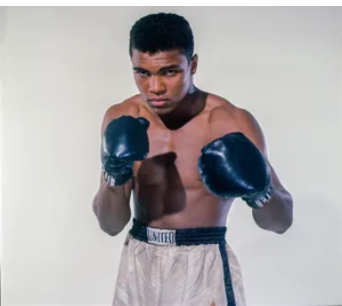
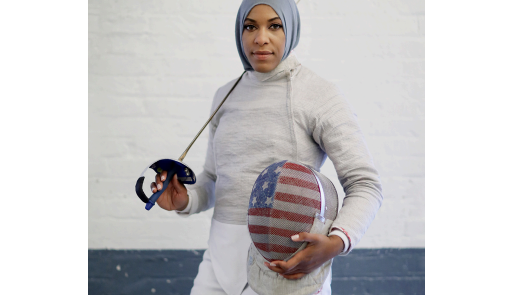
Athletes like Muhammad Ali and Ibtihaj Muhammad remind us that sport has never been separate from justice.
Ali refused a war, when he did not fight in Vietnam. Muhammad claimed space for Muslim women on the Olympic stage. Their legacies alone prove the importance of speaking up and that that silence is not neutral. Silence sides with power.
Every time we cheer, we should ask a question. Who is missing from this field and why? Whose name never made the roster because borders were closed, bodies were controlled, or voices were silenced?
Sport is often marketed as a dream. But for many marginalized athletes, it is something heavier and braver than that. It is proof of life, resistance in motion, a refusal to disappear quietly. More than medals, it is about the radical act of being seen.
Naira is a Toronto-based participant in Youth Media Forward: meet the Toronto participants here