


Following yesterday’s World Cup final, today marks day one of the tournament’s legacy in North America. While the matches are over and the spotlight will move on, young people throughout the 16 host cities are continuing to practice sports, follow teams as fans, and lead in their communities.
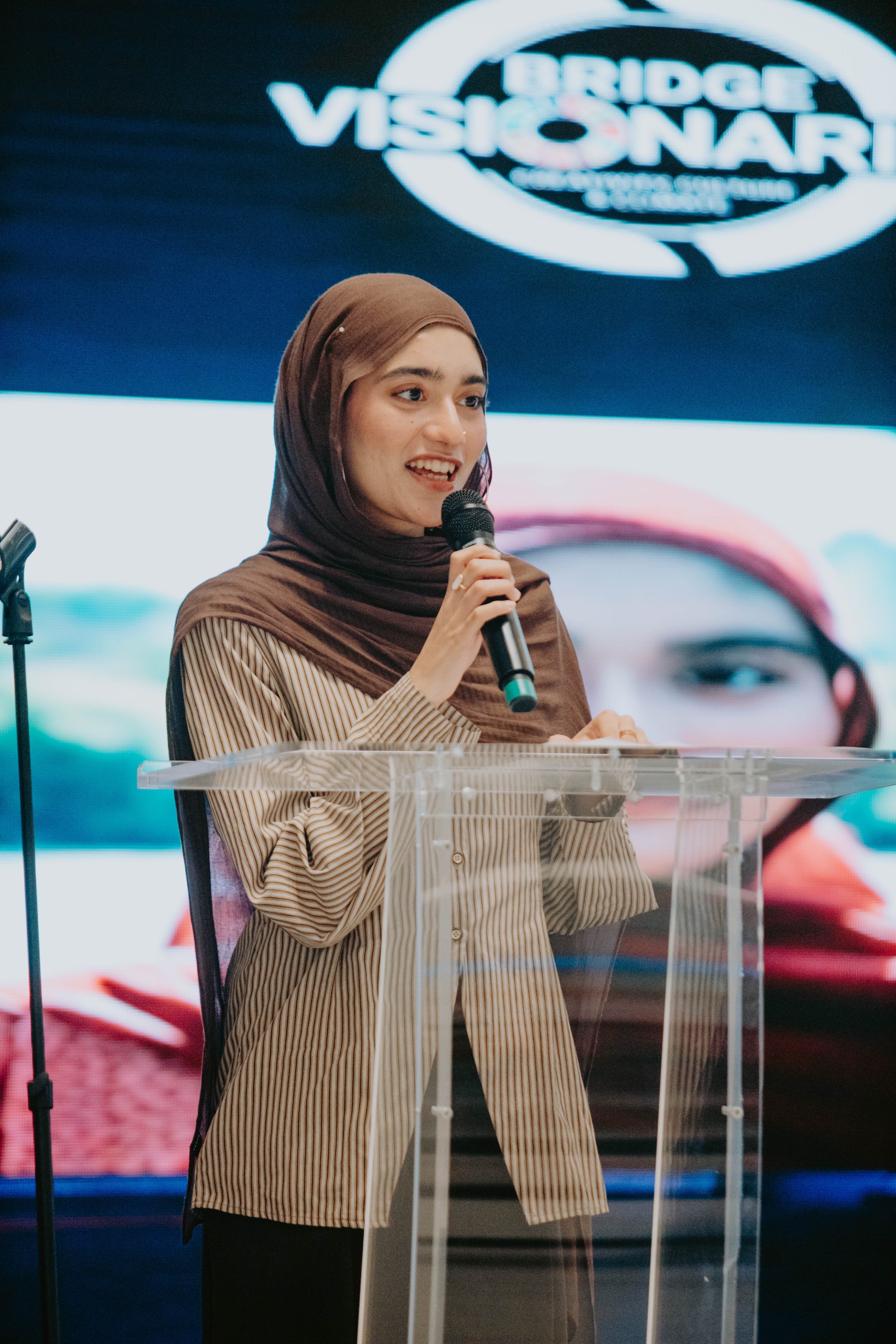
At a recent event hosted by Bridge Visionaries at American Dream Mall in New Jersey, next to the stadium where the final was played, Generation 2026 youth reporter and leadership council representative Fatima made the case for generational investment in sports. She said that investments in sports can bring lasting change, provided they are sustained.
“Sustained investment means much more than constructing a field or cutting a ribbon at a grand opening.
It means asking who keeps the lights on after the celebration is over. Who trains the next generation of coaches? Who replaces worn-out equipment? Who keeps registration affordable for families? Who makes sure girls stay in the game? Who builds adaptive programs so athletes with disabilities have the same opportunities to compete? Who maintains safe, welcoming spaces year after year?”
Read Fatima’s full keynote below.
During the event, other speakers shared their perspectives on sports’ contribution to the Sustainable Development Goals and the collaboration that’s needed: Ndeye Diarra of Giants of Africa, Liz Agbor-Tabi Oton, VP of the FIFA Global Citizen Education Fund and Kate Masuch, Director of Corporate Sustainability & Social Impact with Novo Nordisk, moderated by Caralene Robinson.
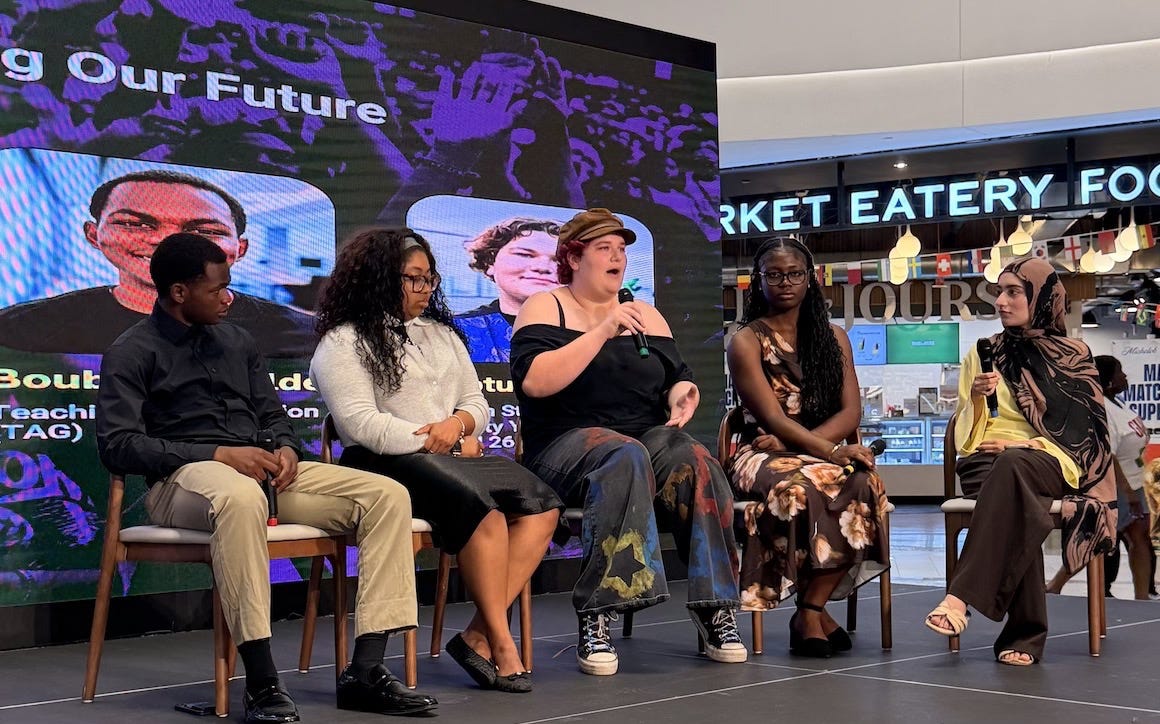
The following week, Fatima moderated a second Bridge Visionaries event hosted in partnership with the Nelson Mandela Foundation, “It’s In Our Hands: Youth Voices Shaping Our Future”. The session marked Mandela day and harnessed his quote:
"It is in your hands to make a better world for all who live in it.”
Here are Fatima’s full remarks:
Why generational investment in sport matters
Good afternoon, everyone!
It is such an honor to be here with all of you today at this incredible event. My name is Fatima. I’m an incoming public policy student at Rutgers University, a youth leader and advocate for the Centre for Sport and Human Rights, and someone who has spent the past several years working with organizations dedicated to expanding opportunities for young people through civic engagement and community leadership.
Throughout today, you’ve heard from remarkable leaders, experts, and professionals who understand the science, business, and exact systems that make initiatives like these possible. My perspective is a little different. I’m here not only as someone passionate about social impact like the rest of you, but as someone who represents the very generation these investments are ultimately meant to serve. I’m a stakeholder in the future we’re discussing today, and I’ve experienced firsthand what happens when someone chooses to invest in the potential of a young person.
So before we dive in, I need everyone’s help for just a moment. Let’s do a little exercise. I know everyone here has been following the FIFA World Cup. If you watched the Cape Verde - Argentina match, would you stand up for me? Now, stay standing for just one more second. Regardless of whether you watched the match, how many of you actually predicted Cape Verde would go that far?
That match has stayed with me beyond the goalkeeper’s relentless saves because of what it represented. Cape Verde reminded the world that greatness emerges from places where we may least expect it. Sometimes, we fail to recognize potential not because it isn’t there, but because we don’t expect to find it there. Sometimes, we only begin to notice it once the tide starts turning in their favor. And I think that’s true far beyond soccer. Because talent is universal but unfortunately, opportunity is not.
So why sport? Why should we invest in sport alongside education, healthcare, infrastructure, and the many other priorities competing for our attention? Sport has a remarkable ability to accomplish in a short period of time what few institutions can only do long term: it brings people together who otherwise may never have crossed paths.
At a time when headlines are filled with political division, conflict, and growing polarization, the World Cup has reminded us of something extraordinary. For some time, the world practices something it often struggles to achieve other years: connection. You see Norwegians teaching rows to other fans, strangers doing the wave together in packed stadiums, fans exchanging jerseys at festivals, and people from every corner of the world celebrating side by side. They don’t share the same language, culture, religion, or politics to know that they can have a great time together.
In an increasingly divided world, sport remains one of the few places where belonging comes before difference. It builds athletes, communities, friendships, and the kinds of human connection our societies desperately need.
Sport also reminds us that potential has never belonged to one country, one income bracket, or one generation. Your passport doesn’t score goals and your income doesn’t defend corners. Your ethnicity won’t make saves for you and your background won’t determine your work ethic. The field won’t ask where you come from; it looks at what you’re willing to contribute.
Think of a player like Lamine Yamal, who, as a teenager, has already become one of soccer’s brightest stars. His story reminds us that excellence isn’t determined by age or circumstance yet it emerges when talent is given the opportunity to flourish. Particularly for someone like me, who has been told age is always a determining factor, it reminds me that we can always rise beyond limits. Before we become labels, we’re teammates. Before we are defined by where we come from, we’re united by a common purpose.
And perhaps most importantly, investing in sport is one of the few investments that continues to multiply long after the final whistle. Economists often talk about compound interest, the idea that the greatest returns come from investments that grow over time. I believe sport works the same way. A football pitch becomes a gathering place where you share picnics and events with your community. A rec center becomes a safe space where you run around with friends after school. A coach becomes a mentor the same way a young athlete becomes a leader who returns to invest in the next generation. These aren’t simply facilities or programs; they’re a part of a social infrastructure that strengthens healthier, safer, and more connected communities. The return on that investment isn’t measured only in wins or trophies, it’s also measured in the lives that are changed.
But if sport is so powerful already, then the next question becomes: why sustained investment? A FIFA World Cup or an Olympics tournament doesn’t last forever. On the contrary, the confidence a young person gains from being part of a team can last a lifetime. The real measure of success is what happens after the final whistle. What remains once the fans go home, the cameras leave, and the headlines fade? That’s where our legacy comes in.
Confidence isn’t developed in one weekend the same way leadership isn’t learned in a single season. Belonging won’t happen overnight. These are things that take time, consistency, and people who are willing to keep showing up. One clinic can inspire a child, but years of support can significantly change the course of their life. Talent may open the door, sustained investment is what keeps it open.
And sustained investment means much more than constructing a field or cutting a ribbon at a grand opening. It means asking who keeps the lights on after the celebration is over. Who trains the next generation of coaches? Who replaces worn-out equipment? Who keeps registration affordable for families? Who makes sure girls stay in the game? Who builds adaptive programs so athletes with disabilities have the same opportunities to compete? Who maintains safe, welcoming spaces year after year? Because infrastructure without investment eventually becomes inaccessible.
That’s also why sustained investment is an investment in equity. Without it, sport becomes increasingly expensive, participation begins to shrink, and opportunities become concentrated among those who can already afford them. But when we invest consistently, we create scholarships, provide transportation, supply equipment, support community coaches, and build accessible facilities. We make sure that access to opportunity isn’t determined by someone’s ZIP code, income, or background.
As a student interested in policy, I’ve learned that many public investments typically solve one challenge at a time before creating a ripple. Education improves education. Healthcare improves health. Transportation improves mobility. Sport is different. It strengthens physical and mental health, develops leadership, builds community, improves educational outcomes, creates employment skills, and even contributes to safer, more connected neighborhoods. So who makes that future possible?
The answer is all of us. Soccer is uniquely positioned to lead generation after generation.
But no club can do this alone. No company can do this alone. No government can do this alone. Lasting change happens when the public sector, private sector, nonprofits, educators, and community leaders choose to work together, for the next event, for the next generation. As you leave here today, you’ll return to making decisions: about budgets, partnerships, hiring, sponsorships, investments, and priorities. My hope is that young people are never an afterthought in those decisions. Because the next generation will live with the consequences of the choices we make today.
Access is something we can create. Opportunity is a choice. Let’s choose it.
Thank you.